In everyday speech “heel spur” often just means heel pain, but they are not the same. A heel spur is a bony growth on the heel bone that shows on an X-ray; heel pain can occur without one, and some people have a spur that causes no trouble at all. So the physiotherapists at MozgásKlinika Terézváros examine how the foot works and is loaded, not the X-ray.
Where can heel pain come from?
Several factors can lie behind pain around the heel, often together: the load on the tissues of the sole and calf, the movement of the ankle and foot, footwear, a sudden change in load (more standing, walking or running), and body weight. Where it hurts is not necessarily where the problem comes from.
So it is not worth looking for a single cause, or asking whether the “spur” has to be “removed”. The better question is: what is overloading the heel area, and how can the foot’s load tolerance be rebuilt?
What does the physiotherapist examine?
Among other things:
- where and when the pain appears (the first steps in the morning, after long standing, during sport);
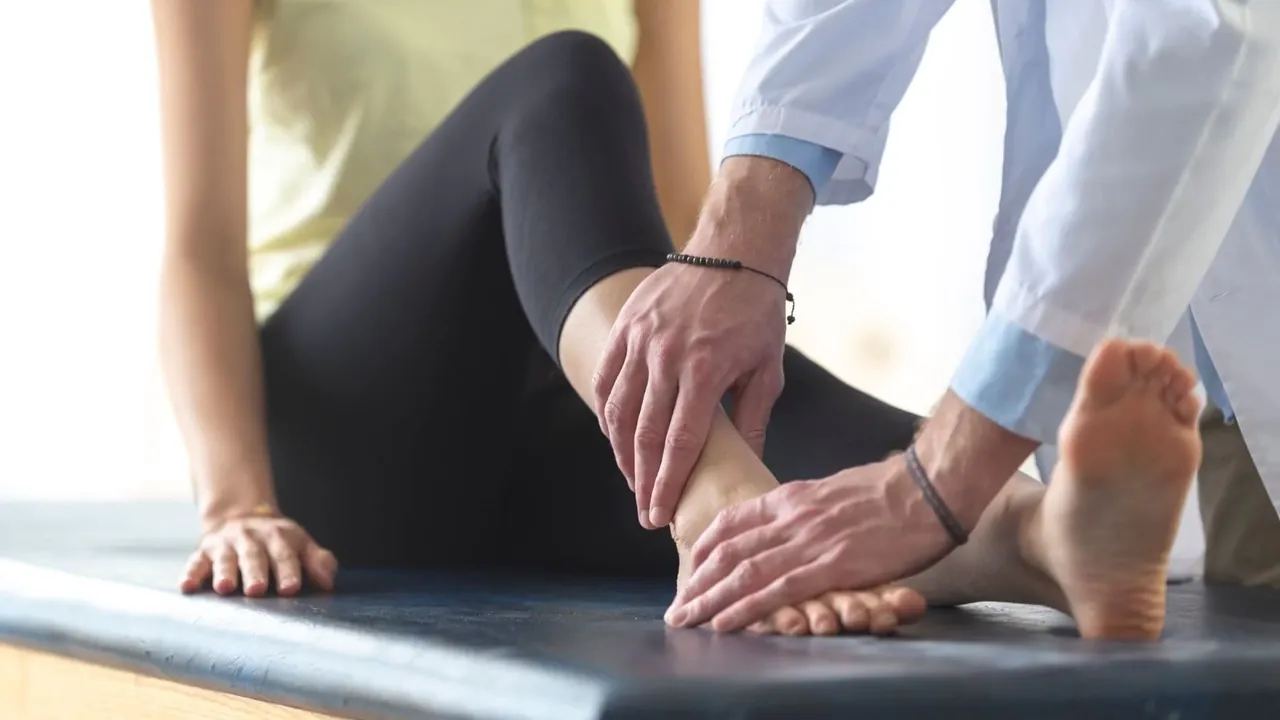
- how the ankle and foot move, and how tight the calf and sole are;
- muscle strength and movement control, how you stand and walk;
- what you do every day, and what changed before the complaint began.
The aim is not to pronounce on the basis of one test, but to weigh several findings together.
How can treatment be built up?
Whether the clinic treats this complaint in your case, and by which method, is something the therapist tells you after the assessment. In general the logic of the MozgásPiramis® applies:
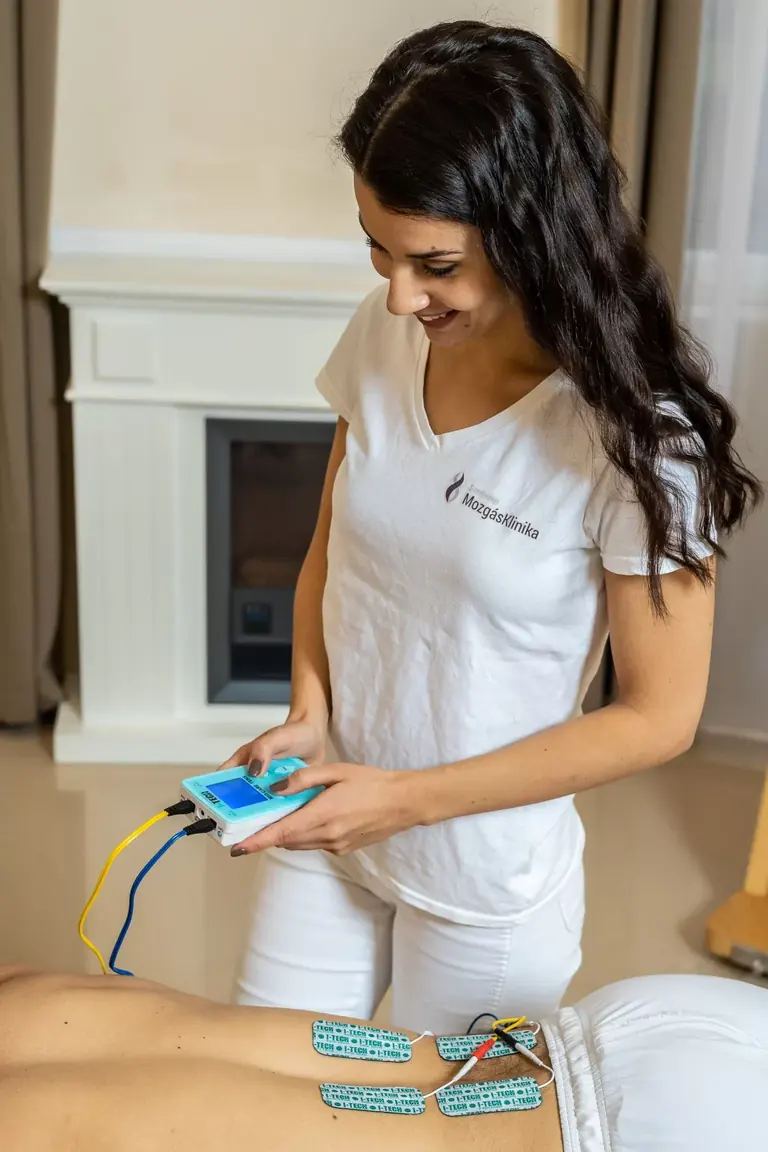
- Pain relief: manual therapy and, where appropriate, physical therapy (TENS, ultrasound, cupping, kinesiology taping and flossing are available at the clinic).
- Range of motion and strength: sorting out how the ankle, foot and calf work, with individual physiotherapy.
- Graded loading: back to standing, walking and sport, step by step.
We give no general exercise list, because the same symptom can go with different problems. Shockwave treatment is not on the Terézváros clinic’s price list; if your doctor recommended it, ask where it is available.
What can you do in the meantime?
- Notice what brings the complaint on and what eases it: useful information for the examination.
- If your load rose suddenly (a new sport, a lot of standing), it may be worth easing off for a while.
- Wear comfortable shoes; if it is regularly worse in one pair, that is a signal.
If heel pain has lasted for weeks or limits your daily life, have it looked at. Book a consultation (opens in a new tab)
When not to wait
See a doctor promptly if:
- the pain started after a fall or an accident;
- it comes with fever, unexplained weight loss or feeling generally unwell;
- you notice numbness or weakness in an arm or a leg, or it is getting worse;
- your bladder or bowel control has changed, or you have lost feeling around the saddle area: this is an emergency;
- you have pain at night that does not ease at rest.
See a doctor too if the heel is swollen, red and warm, or if the pain is severe at rest and at night.
Frequently asked questions
Does the spur have to be removed?
Treatment usually aims not at removing the bony growth but at reducing pain and improving the foot’s load tolerance. Questions of surgery are for an orthopaedic specialist.
Do I need an X-ray before I come?
It is not required. If you have a report, bring it and the therapist will review it.
What does the first visit involve?
A 60-minute assessment, with treatment starting in the same session; see what happens at your first visit.
Heel pain rarely has a single cause, so the solution also starts with an examination. Book a consultation (opens in a new tab)