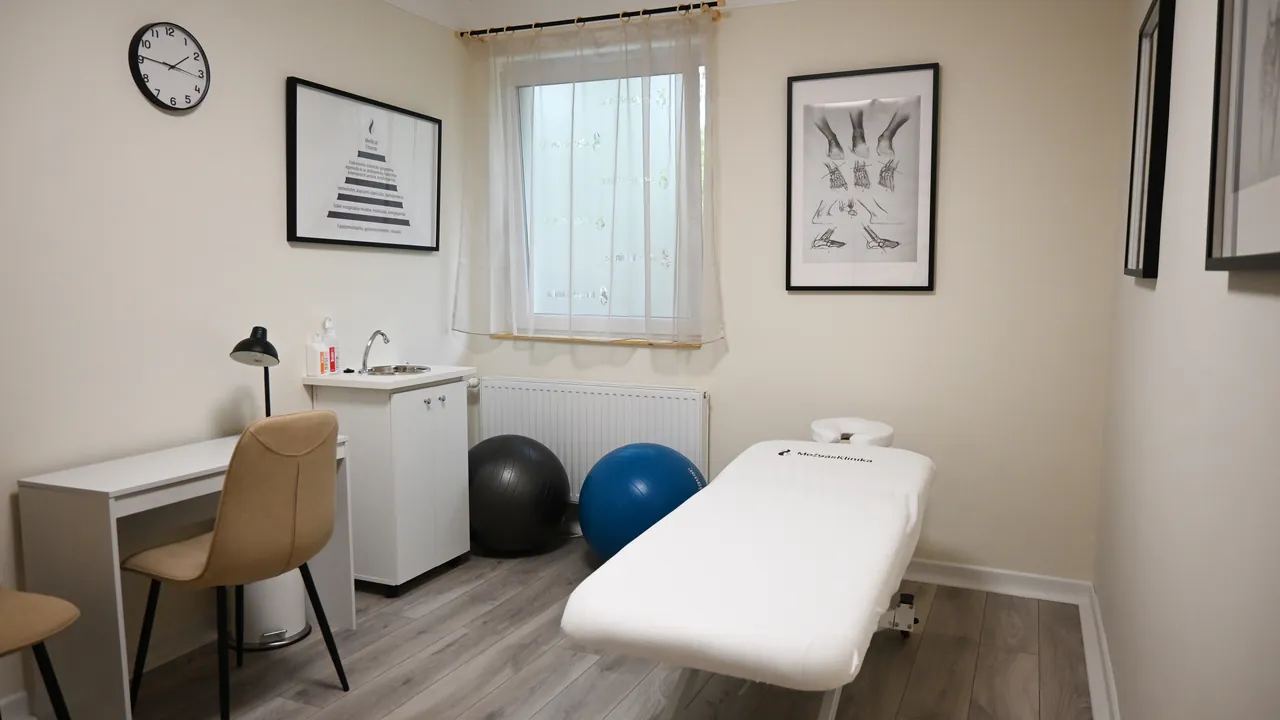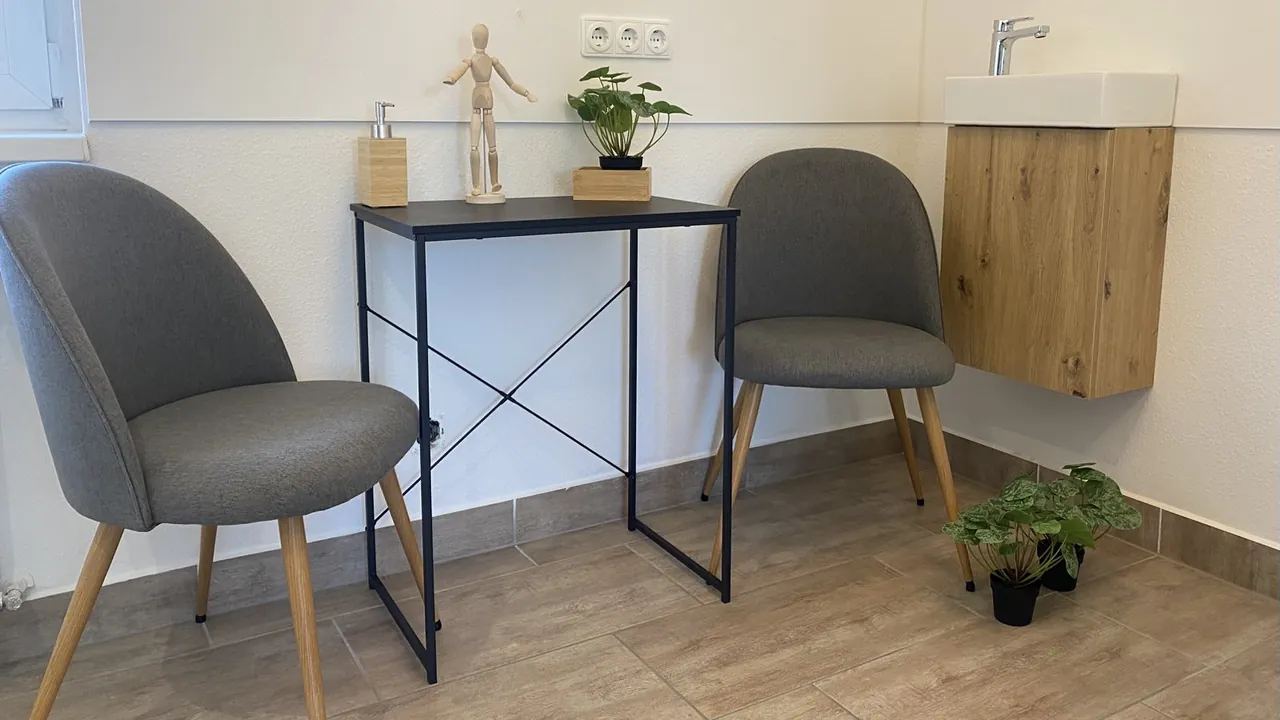
A good home office does not depend on an expensive chair. The most important “setting” is not staying in one position for hours: long periods of the same load, little variety and individual load tolerance together can influence neck, shoulder and lower back complaints. MozgásKlinika Terézváros is close to Nyugati Railway Station, surrounded by offices, so our physiotherapists see many patients who sit for work.
How should you set up your workplace?
The points below are starting points, not rules. What is comfortable for one person may not be for another.
Chair
- Sit so that your feet are on the floor; if they do not reach, put something under them.
- Give your lower back some support: a folded towel will do.
- A kitchen chair or the sofa is fine for a short while, not ideal for a whole day.
Desk and hands
- Keep the keyboard and mouse close enough for your elbows to stay by your sides.
- Rest your forearms on the desk or armrests rather than letting them hang.
Monitor and laptop
- The top of the screen should be roughly at eye level, about an arm’s length away.
- A laptop on its own is always a compromise: bad either for the hands or for the neck. A separate keyboard and mouse, and a few books under the laptop, help a lot.
- With two monitors, put the one you look at most straight ahead.
Why does movement matter more than perfect sitting?
There is no position that is good to hold for hours. Posture is dynamic: the body likes variety.
- Change position often: lean back, stand up, take calls standing or walking.
- With a height-adjustable desk, alternate sitting and standing; standing all day is no better than sitting all day.
- Tie breaks to things that happen anyway: a coffee, a phone call, the end of a meeting.
We deliberately give no exercise routine here. The same symptom can go with different functional problems, so exercises are chosen, taught and checked by the therapist after an examination.
When is the setup not enough?
If your workplace is in order and your neck, shoulder or back still hurts repeatedly, it is worth finding out why. Treatment at the clinic starts with a 60-minute first assessment.
The clinic is open 7:00–20:00 on weekdays, so a session fits before or after work. Book a consultation (opens in a new tab)
When not to wait
See a doctor promptly if:
- the pain started after a fall or an accident;
- it comes with fever, unexplained weight loss or feeling generally unwell;
- you notice numbness or weakness in an arm or a leg, or it is getting worse;
- your bladder or bowel control has changed, or you have lost feeling around the saddle area: this is an emergency;
- you have pain at night that does not ease at rest.
Frequently asked questions
Is an expensive office chair worth it?
A well-adjustable chair can make the day more comfortable, but it will not solve a complaint on its own. Changing position regularly and moving matter more.
Is sitting on an exercise ball a good idea?
For short periods, as variety, it can be fine. We do not recommend it in general as an all-day chair; the therapist can advise once they know your condition.
Can sleep play a part?
Yes, night-time and daytime loads add up. See spine-friendly sleep.
A good workplace setup is one you get up from often. If the complaint returns anyway, book a consultation (opens in a new tab).