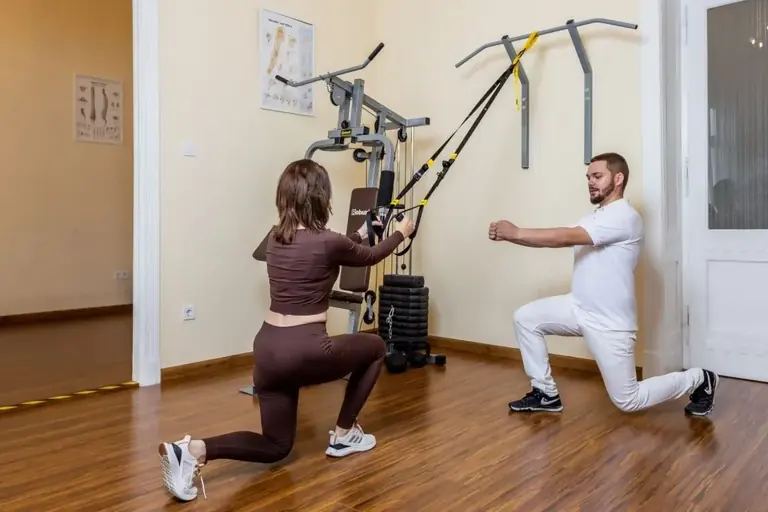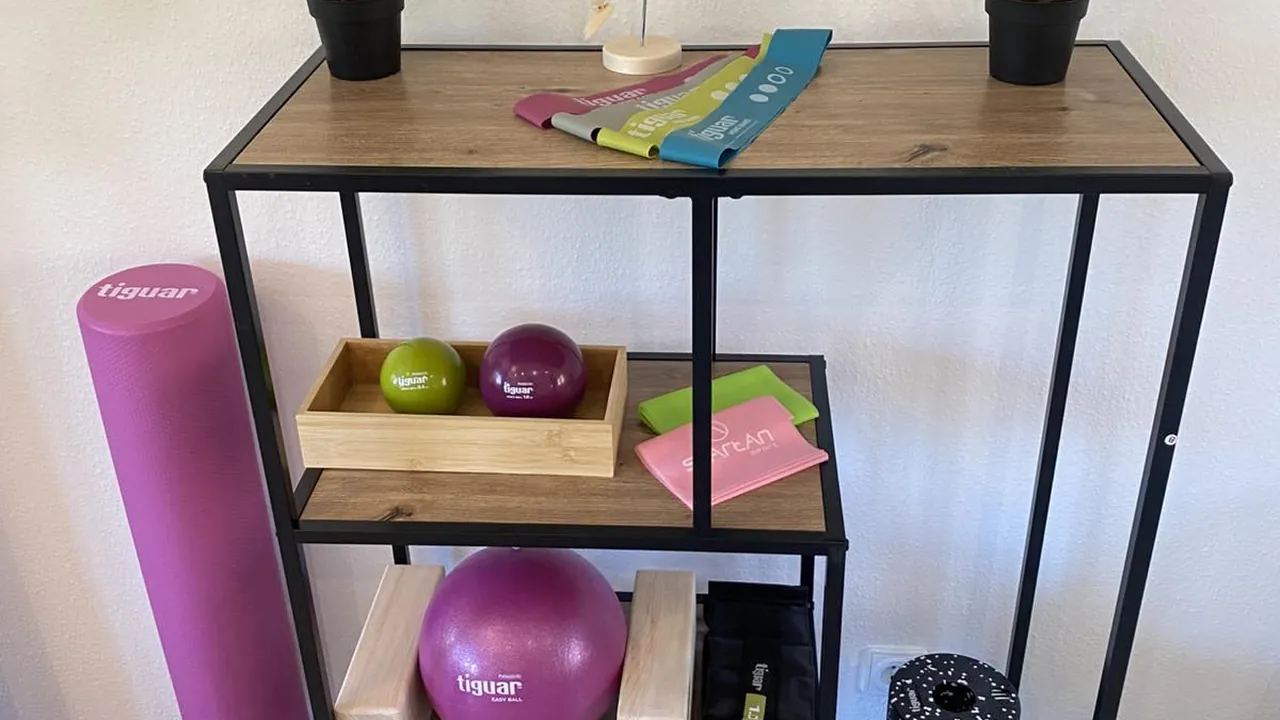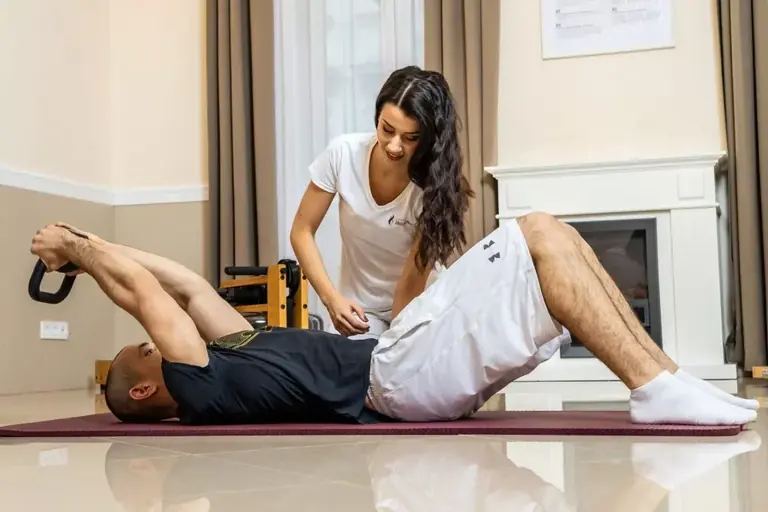
The menisci are the two crescent-shaped cartilage discs of the knee joint that help distribute load and keep the knee stable. After an injury, with or without surgery, rehabilitation aims at more than less pain: the knee’s movement, strength and load tolerance are rebuilt step by step. At MozgásKlinika Terézváros this starts with an assessment and follows the levels of the MozgásPiramis®.
What should you know about meniscus injuries?
The complaint can appear after a sudden twisting movement, or develop gradually. Where the knee hurts is not always where the problem comes from, and an imaging report alone does not say what your knee can do. That is why the therapist weighs the report together with the examination and your complaints.
Whether an injury needs surgery is decided by an orthopaedic specialist. The physiotherapist’s job is rehabilitation: preparation before surgery, and rebuilding function after surgery or alongside conservative care.
How is rehabilitation built up?
1. Assessment
The therapist looks at the knee’s range of motion, swelling, muscle strength and movement control, but not only at the knee. How the hip and ankle work, and how you load the leg, can also affect the knee. After surgery the surgeon’s instructions come first; bring them with you.
2. Pain and range of motion
On the first two levels of the MozgásPiramis® the aims are pain relief and restoring the range of motion you need, with manual therapy and active exercise.
3. Strength and muscle activation
After an injury or surgery the thigh muscles sometimes switch on with the wrong timing or too little force. “More strengthening” is not always the first step then: the right activation has to be relearned first, and strength work builds on it.
4. Stability and return to load
On the upper levels come functional stability, movement control and graded loading: stairs, squats, running, then the movements of your sport.
The exercises are chosen, taught and checked by the therapist, which is why we do not give a general exercise list here.
How long does it take?
There is no answer that fits everyone. The pace depends on the type of injury, whether there was surgery and of what kind, your doctor’s instructions and how you respond to load. The therapist follows progress with re-assessments and adjusts the plan. We do not promise a recovery time or a number of sessions in advance.
If a knee problem keeps limiting you, or you are looking for rehabilitation after surgery, book a consultation (opens in a new tab).
When not to wait
See a doctor promptly if:
- the pain started after a fall or an accident;
- it comes with fever, unexplained weight loss or feeling generally unwell;
- you notice numbness or weakness in an arm or a leg, or it is getting worse;
- your bladder or bowel control has changed, or you have lost feeling around the saddle area: this is an emergency;
- you have pain at night that does not ease at rest.
With a fresh injury, if the knee swells suddenly, cannot take weight, locks or gives way, see an orthopaedic specialist first.
Frequently asked questions
Is physiotherapy worthwhile without surgery?
Whether a meniscus injury is treated with or without surgery is a medical decision. If your doctor recommends conservative care, physiotherapy can be part of it: the aim is to rebuild the knee’s load tolerance.
When can I start after surgery?
The surgeon decides. Bring the discharge summary and instructions to the first visit so the therapist can plan around them.
Do I need a referral?
No. See Do you need a referral for physiotherapy?
Knee rehabilitation is a step-by-step process in which the load is always set by your current condition. Book a consultation (opens in a new tab)